Leave Your Message
Precision-forged Double Block and Bleed valve configurations designed to API 6D and ASME B16.34 standards for high-capacity natural gas networks.
Navigating high differential pressures, fugitive emissions mandates, and system redundancy across cross-border energy transport arteries.
Modern large-diameter natural gas transmission pipelines (spanning DN600 to DN1400 / 24" to 56" and operating at pressures from ANSI Class 600 to Class 2500) serve as the vital arteries of global energy infrastructure. In these critical systems, uncompromised mechanical integrity, zero visible leakage, and guaranteed dual isolation are essential to avoid catastrophic environmental hazards, human safety risks, and multi-million-dollar downtime costs.
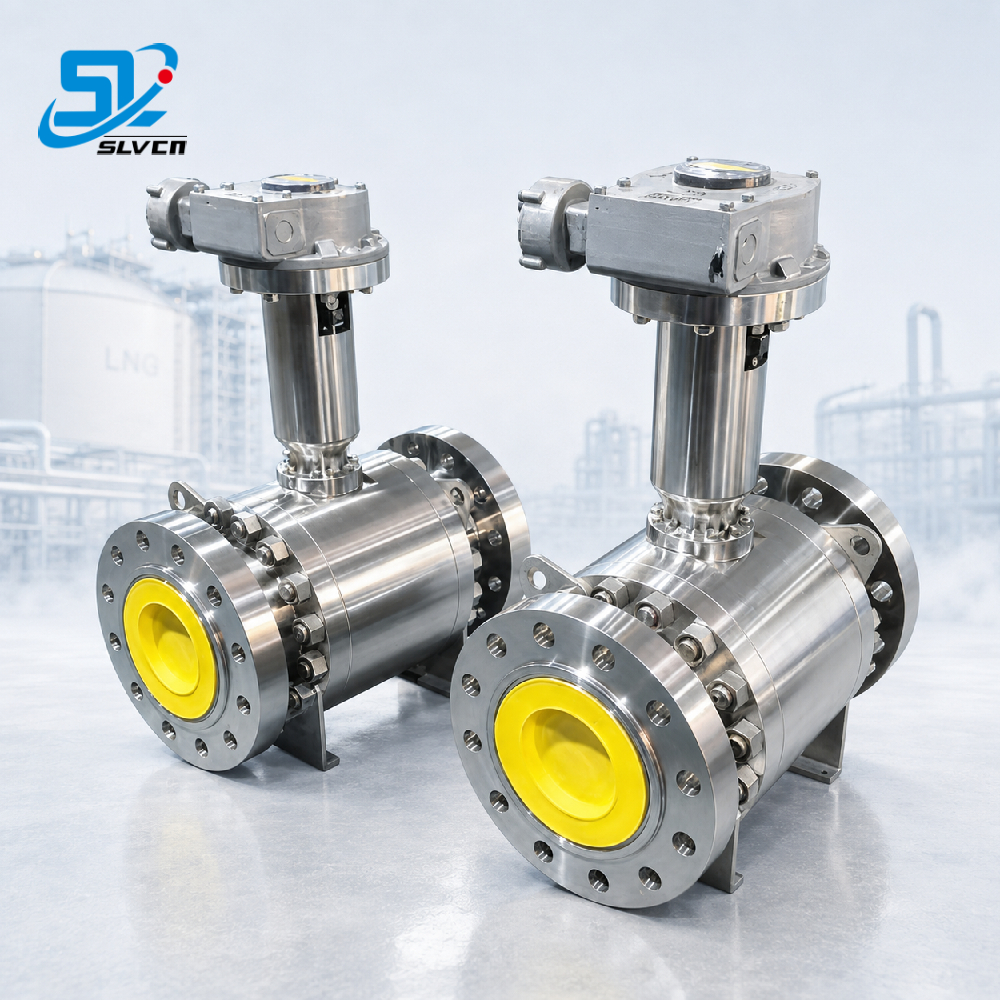
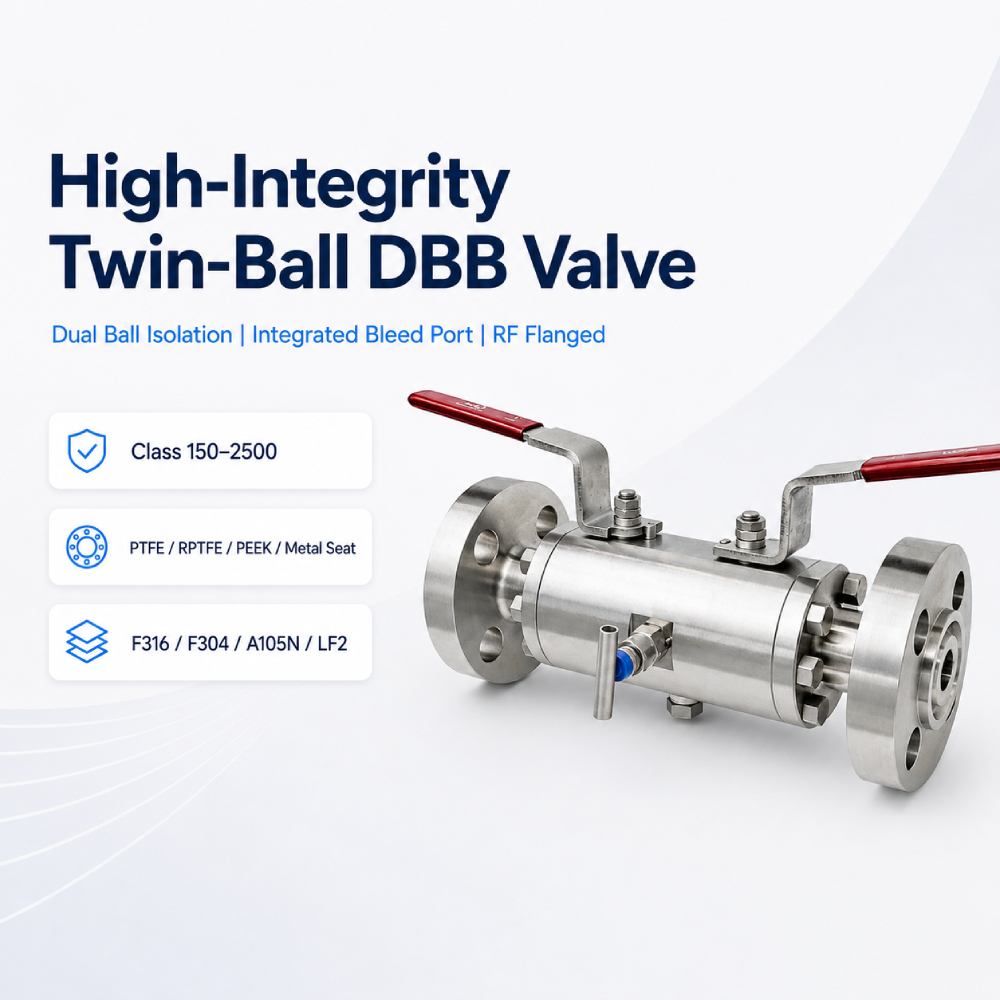
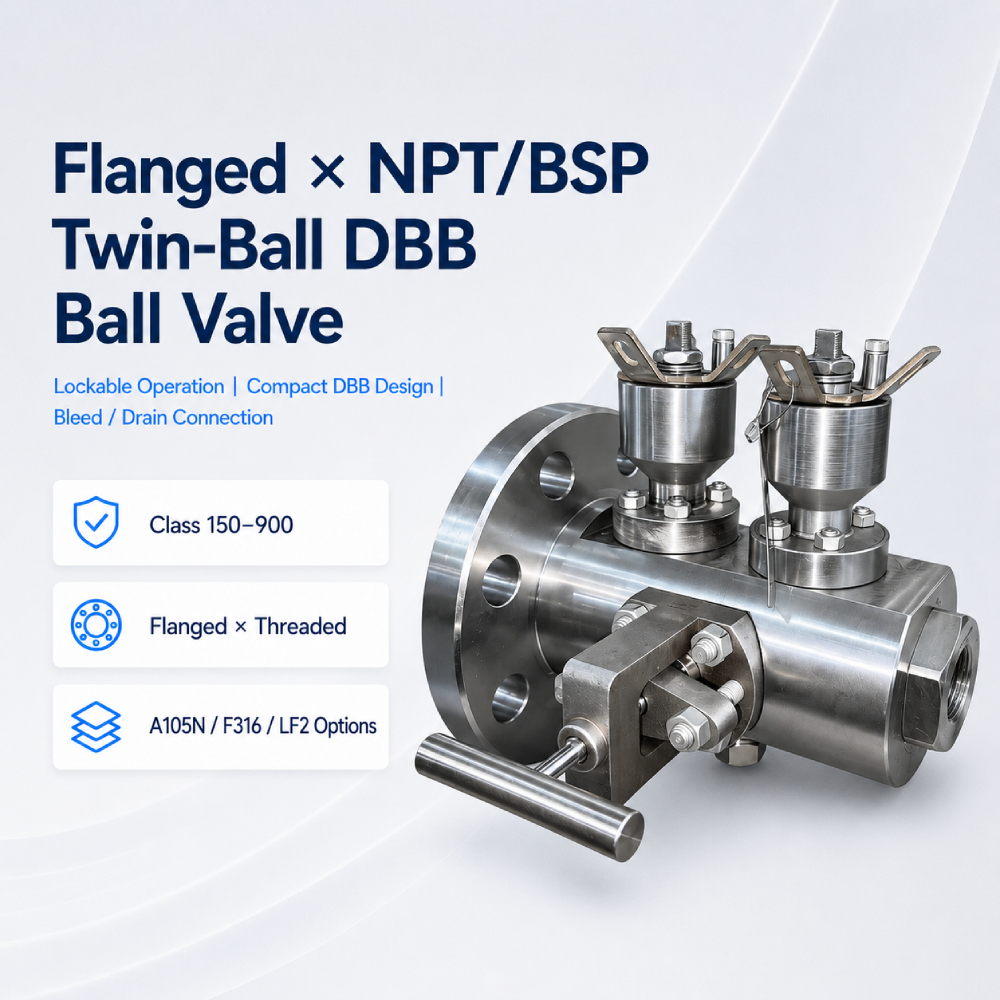
Historically, pipeline operators achieved Double Block and Bleed (DBB) isolation by installing two individual trunnion ball valves in series with an intermediate spool piece and a bleed valve. While functional, this legacy setup introduced massive weight, extended pipeline layout footings, doubled flange leak paths, and complicated structural supports—especially on offshore platforms, subsea tie-backs, and crowded compressor stations. The unified Double Ball Valve integrates two independent trunnion-mounted balls into a single forged body, delivering true dual-barrier safety within a compact, weight-efficient footprint.
By housing two independent rotating closures within a single one-piece or split-forged housing, double ball valves eliminate up to 70% of potential atmospheric leak paths compared to traditional twin-valve spool assemblies. Operators benefit from:
Each ball operates with independent spring-loaded seat rings that provide bidirectional sealing under both micro-differential and full maximum allowable operating pressure (MAOP). If primary upstream seat barrier integrity is ever compromised, the secondary downstream ball guarantees fail-safe positive shut-off.
Tailored seat engineering enables self-relieving Single Piston Effect (SPE) or high-security Double Piston Effect (DPE) configurations. In gas transmission, dual SPE seating dynamically vents overpressure back to the line while intermediate bleeds permit zero-leak confirmation during hot pipeline servicing.
Featuring low-torque stem geometry, graphite fire-safe seals, and live-loaded dynamic PTFE/Chevron packing compliant with ISO 15848-1 Class AH and API 641, our double ball valves effectively curb methane emissions across gas headers and compressor discharge stations.
Engineered for extreme operating envelopes where single-valve failure is unacceptable.
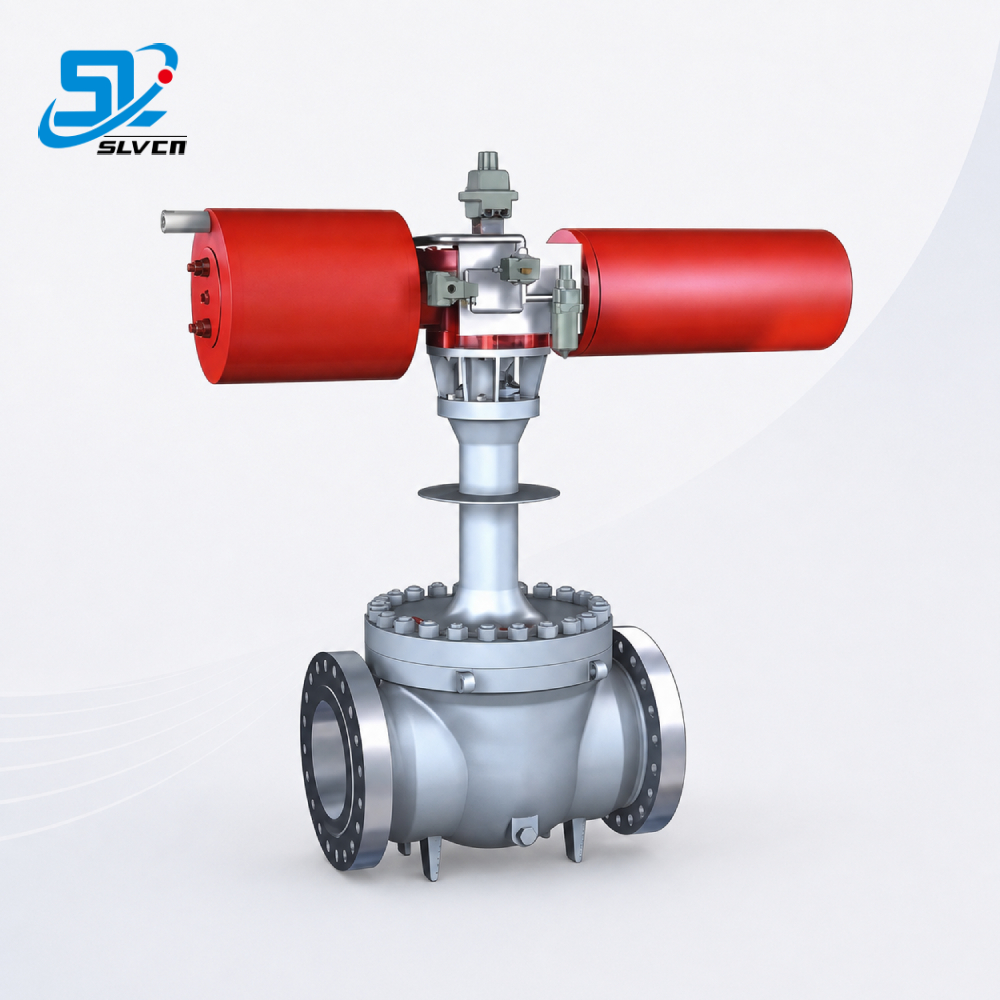
In interstate gas transmission, compressor stations maintain pipeline flow and pressure. Station mainline headers require instantaneous Emergency Shutdown (ESD) capabilities. Double ball valves provide automated rapid closure with Scotch Yoke pneumatic actuators or electro-hydraulic systems, isolating high-pressure compressor discharge banks from the main transmission trunk in milliseconds without pressure surges.
Pipeline inspection and cleaning pigs require safe insertion and extraction while the pipeline operates under live pressure. Utilizing a double ball valve as the station isolation barrier allows pipeline maintenance crews to bleed and verify the intermediate chamber to zero gauge pressure, guaranteeing 100% safe barrel access without stopping pipeline throughput.
Weight and space represent paramount engineering constraints on offshore topsides and FPSO gas treatment facilities. Integrated double ball valves drastically trim structural skids while resisting harsh marine atmospheric corrosion, wave-induced mechanical vibrations, and extreme cyclic pressure variations.
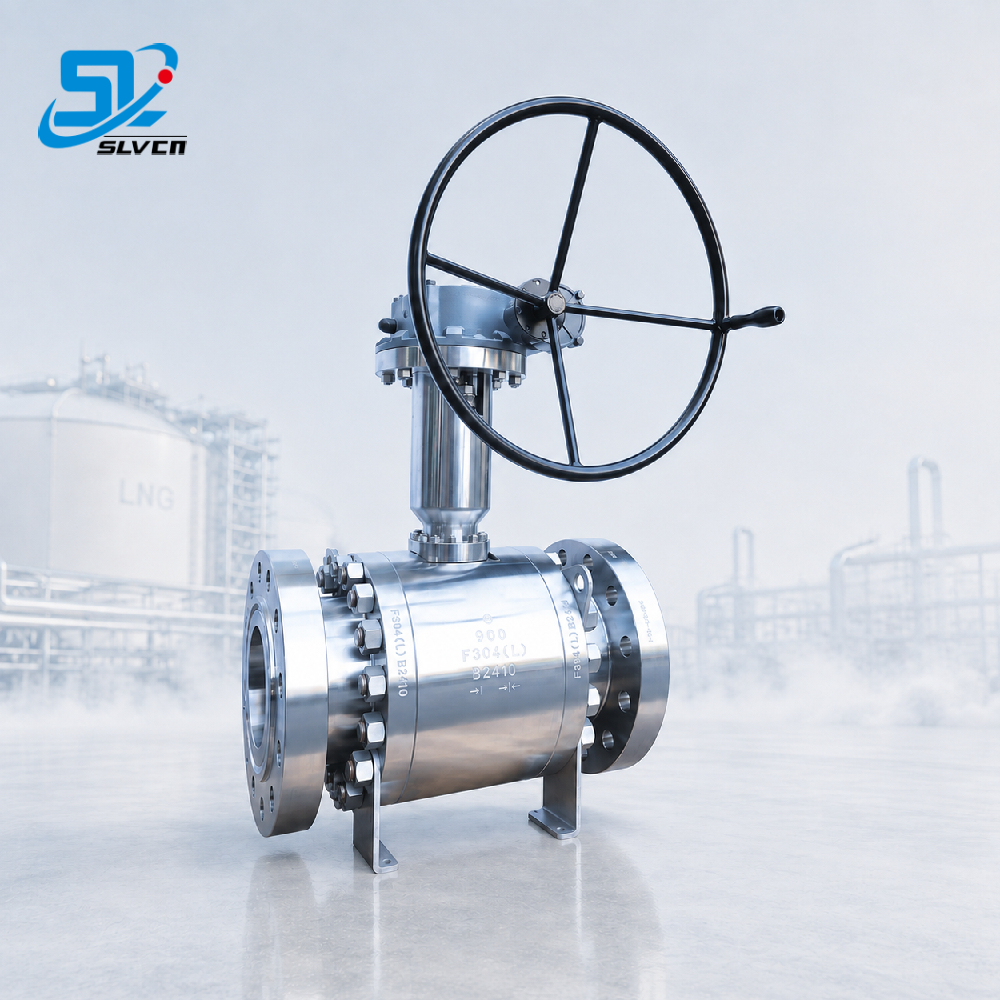
Liquefied Natural Gas (-162°C) requires specialized extended bonnets to create a vapor insulation column protecting the stem gland packing. Forged DBB ball valves with specialized PCTFE, Kel-F, or Stellite metal-to-metal seating deliver zero bubble-tight sealing during cyclic thermal shock and boil-off gas handling at import terminals.
As global energy grids introduce hydrogen blends (up to 20-30% H₂) and process highly sour reservoir streams containing high concentrations of H₂S and CO₂, valve materials must prevent sulfide stress cracking and hydrogen embrittlement. Shoulong valves leverage NACE MR0175 / ISO 15156 compliant forged alloys (A105N, LF2, F51 Duplex, Inconel 625 overlays) with tungsten carbide coatings (TCC) to guarantee decades of erosion- and corrosion-resistant service life.
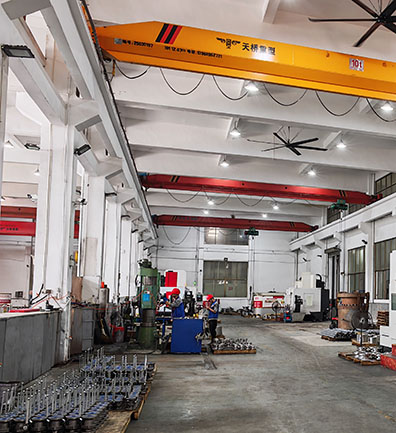


With over 30 years of manufacturing experience, SLVCN is a professional designer and manufacturer of high-performance forged steel ball valves for critical industrial applications. We specialize in extreme working conditions including high pressure, high temperature, and cryogenic environments, providing safe and reliable flow control solutions for global industrial projects where operational reliability is non-negotiable.
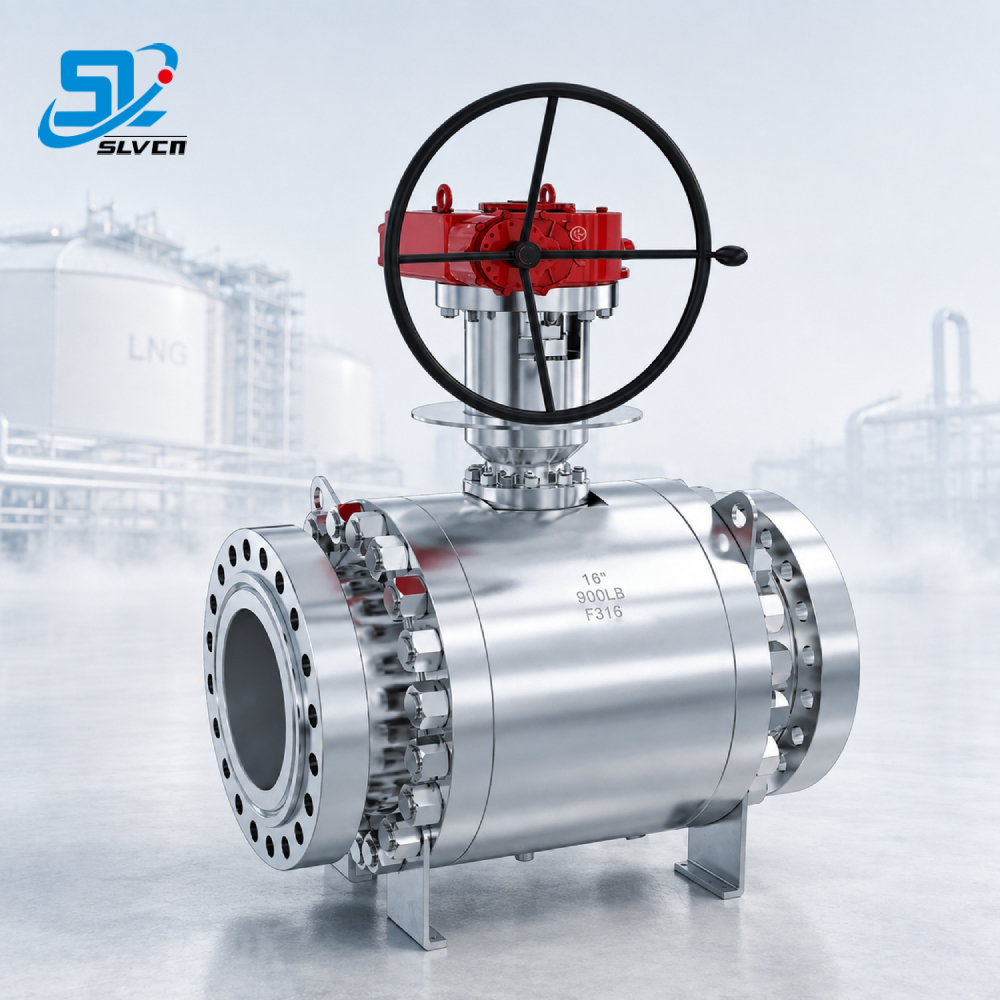
Compared with conventional cast valves, SLVCN forged valves feature higher material density, superior mechanical strength, improved resistance to pressure fluctuations and thermal shock, and significantly longer service life under severe service conditions. Our state-of-the-art forging and heat treatment processes eliminate structural porosity, shrink defects, and micro-cracks, ensuring impenetrable pressure boundaries for large-diameter pipeline integrity.
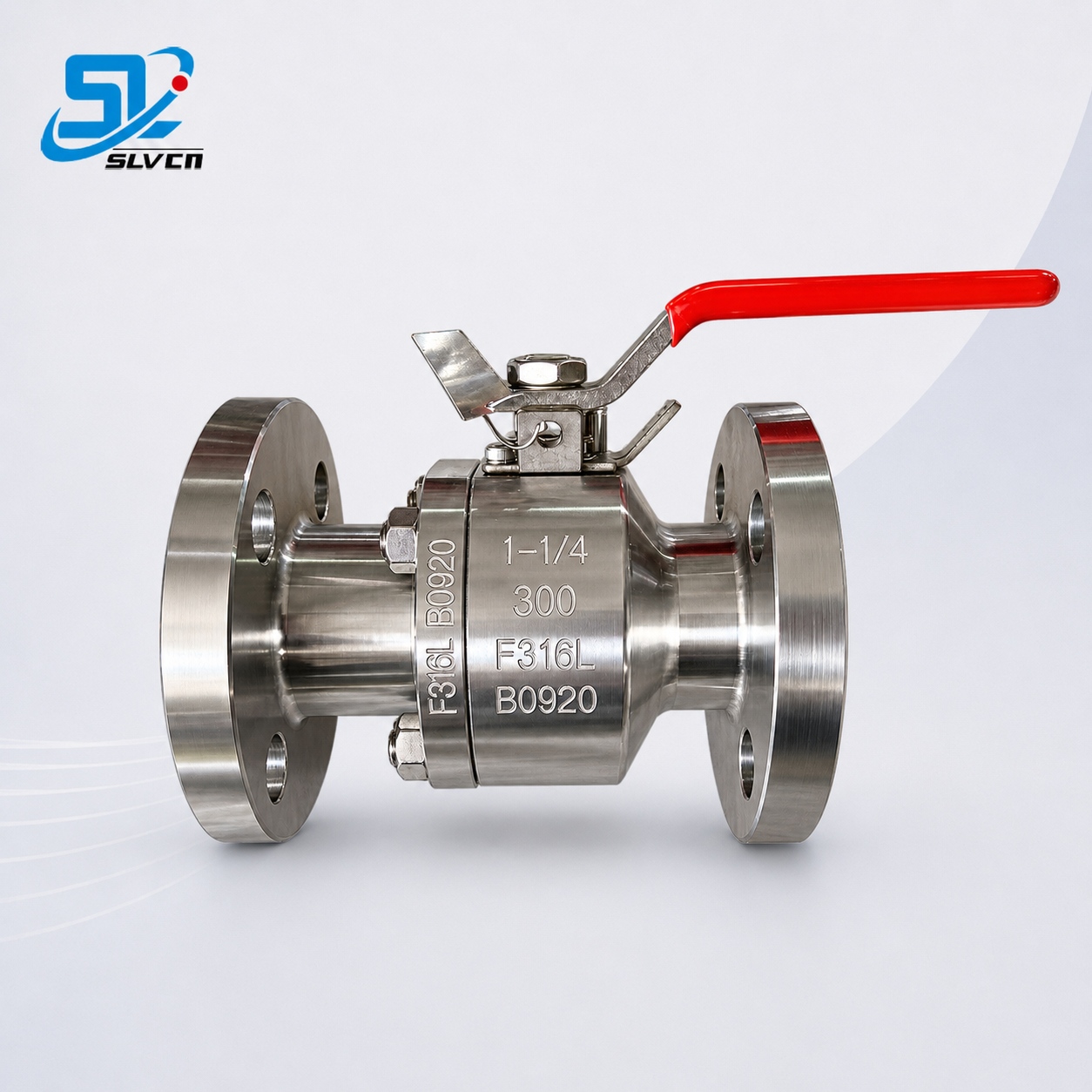
Contact Our Engineering Team →Our core product range covers forged trunnion-mounted and floating ball valves, top-entry and side-entry ball valves, fully welded ball valves, metal seated ball valves, cryogenic ball valves, high-pressure ball valves up to Class 2500 (PN420) and customized higher pressure ratings, as well as high-temperature service valves.
Designed for High Pressure, High Temperature, and Cryogenic Applications, SLVCN valves are widely used in long-distance oil & gas transmission pipelines, LNG storage and regasification terminals, offshore platforms and deepwater projects, power plants, refineries, compressor stations, and high-pressure chemical processing units. Whether handling flammable media, corrosive fluids, sour service media (H₂S), ultra-low temperatures, or extreme differential pressures, our valves ensure stable operation, bubble-tight shut-off, and maximum system safety in accordance with international sealing and performance standards.

Safety and reliability are embedded in every design. Our forged ball valves are equipped with Double Block and Bleed (DBB) structures, anti-blowout stems, fire-safe designs in accordance with API 607 / API 6FA, anti-static devices, emergency sealing systems, and pressure-balanced seating structures suitable for high differential pressure operation. Valves can be designed with SPE or DPE seat configurations based on application requirements. For sour service environments, materials and sealing systems comply with NACE MR0175 / ISO 15156 requirements.
Rigorous international compliance and cryogenic validation facilities empowering major global energy infrastructure.
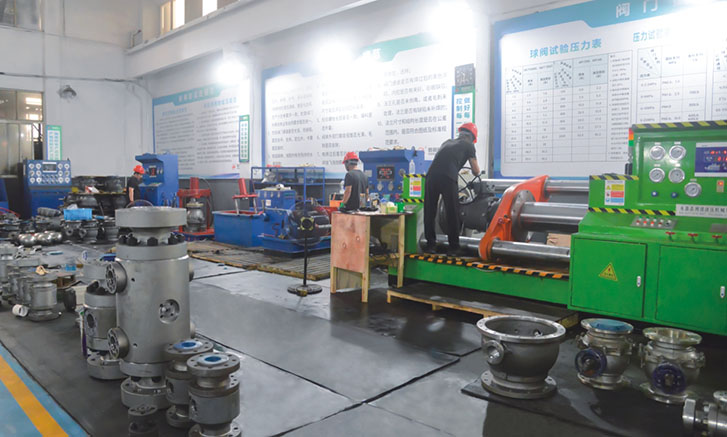
To ensure consistent quality, each valve undergoes a complete series of inspections and performance tests in accordance with API 6D, API 598, and ISO 5208, including shell test, seat leakage test (Rate A / zero visible leakage), fire-safe test, cryogenic test, operational torque test, dimensional inspection, and PMI material verification. SLVCN operates dedicated cryogenic testing facilities to validate valve performance at ultra-low temperatures down to −196°C.
SLVCN is certified to ISO 9001, CE, and API standards, and our products comply with API 6D, ASME B16.34, DIN, ANSI, and JIS specifications. We provide extensive customization capabilities covering sizes from 1/2” to 36”, full bore or reduced bore, special materials including A105, LF2, F11, F22, F51, Inconel, various soft and metal seat designs, and intelligent actuation with pneumatic, electric, and gear operators.
Today, SLVCN serves customers in more than 100 countries and regions, supplying valves to EPC contractors, engineering companies, and end users across Europe, the Middle East, Southeast Asia, and the Americas. Backed by strong engineering expertise, advanced manufacturing, and rigorous quality control, SLVCN is committed to delivering safe, durable, and truly engineered valve solutions for the world’s most demanding industrial projects.
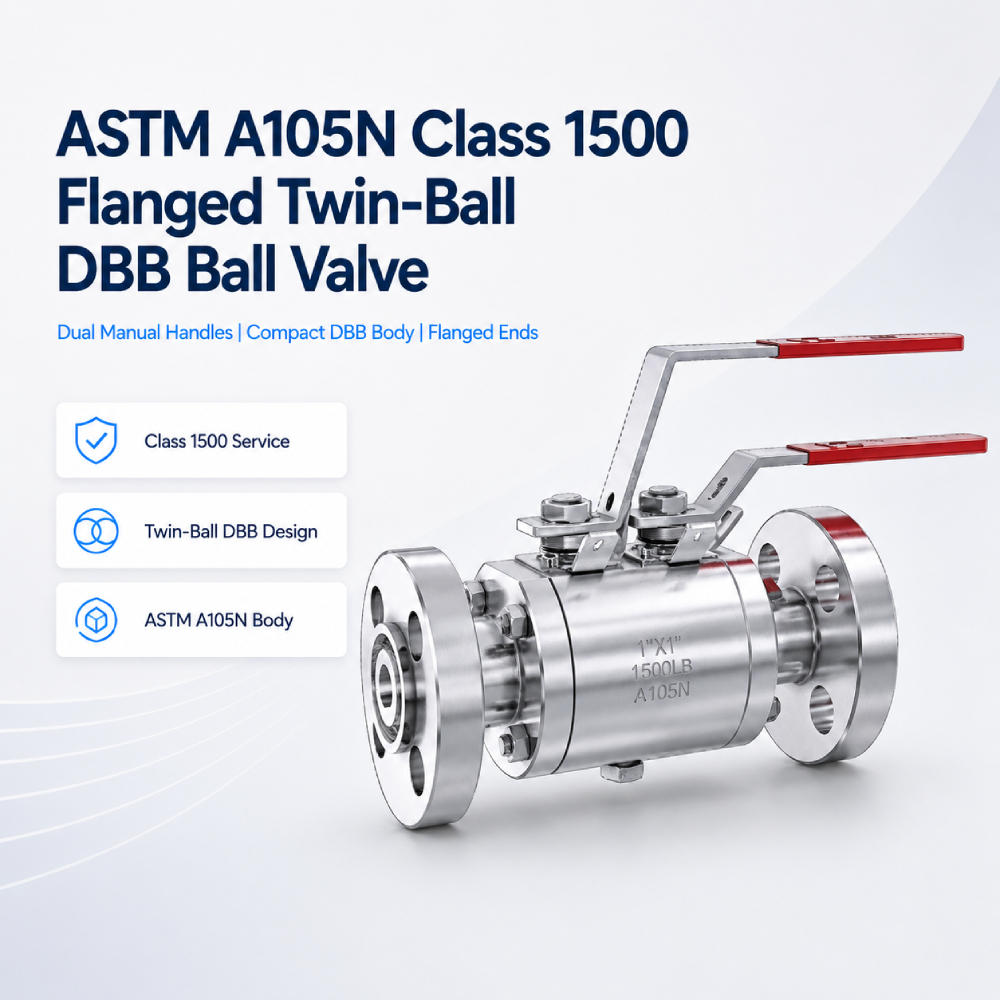
Full spectrum of high-pressure, twin-ball DBB, cryogenic trunnion, and oxygen service valves.


 18061659285