


Leave Your Message


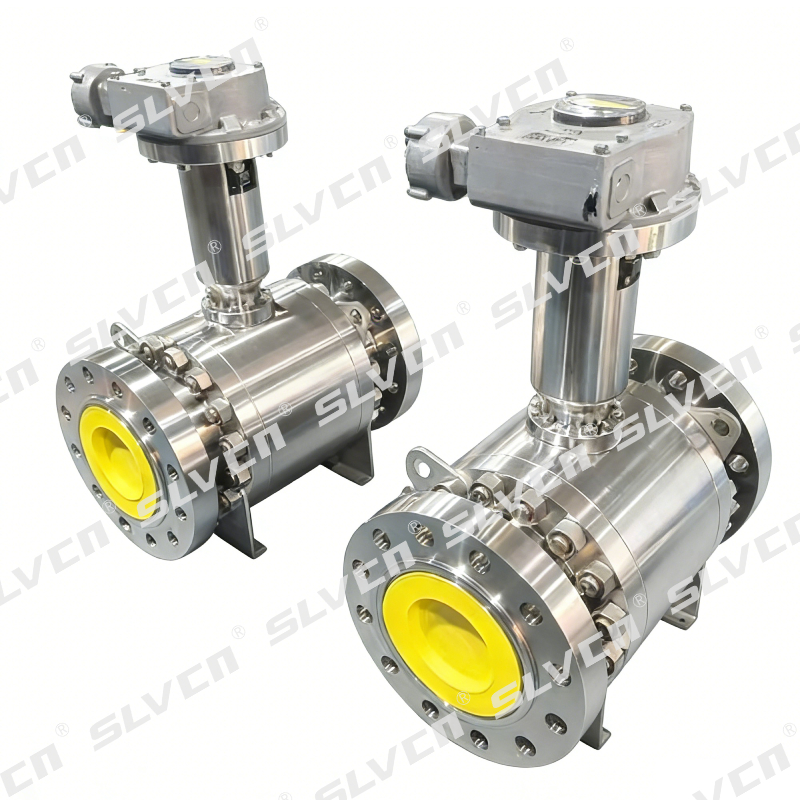
In modern industrial processes, the transportation of solid-liquid mixtures—commonly referred to as slurry—presents some of the most challenging operating environments for pipeline infrastructure. Industries such as mining tailings management, mineral processing, coal slurry transport, dredging, and chemical processing rely heavily on pipeline systems to move highly abrasive and often corrosive media. Within these systems, the selection of isolation and bleed valves is critical to operational safety, maintenance efficiency, and environmental protection.
Abrasive slurry pipeline systems operate under high pressures and constant flow velocities, carrying hard suspended solids like quartz, iron ore, copper concentrates, bauxite, or silica. Standard valve configurations fail rapidly under these conditions due to severe localized erosion, mechanical wear, and solids accumulation within the valve cavities. The industry has shifted significantly toward custom-engineered Bleed Ball Valves and Double Block and Bleed (DBB) systems designed specifically to withstand the relentless scraping and impact of abrasive particles while maintaining bubble-tight shut-off.
Slurry particles continuously impact inner valve surfaces. Advanced coatings and metal-to-metal seating are vital to prevent premature structural failure.
Standard ball valves trap slurry in the body cavity. Specialized bleed valves integrate purge or self-flushing ports to clear trapped solids before compaction.
Double Block and Bleed systems allow operators to safely isolate downstream pipeline segments and bleed off pressure, ensuring zero leakage during maintenance.
Investing in robust forged steel bleed ball valves significantly reduces downtime and maintenance cycles, yielding a lower lifetime cost.

Years Experience

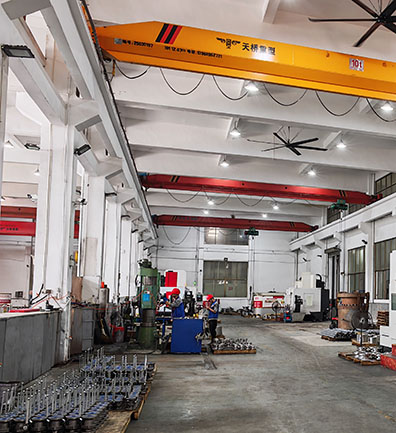
With over 30 years of manufacturing experience, SLVCN is a professional designer and manufacturer of high-performance forged steel ball valves for critical industrial applications. We specialize in extreme working conditions including high pressure, high temperature, and cryogenic environments, providing safe and reliable flow control solutions for global industrial projects where operational reliability is non-negotiable.
Our engineering expertise allows us to customize valve solutions for complex pipeline layouts, ensuring compliance with global standards while delivering maximum abrasion and corrosion resistance.
Contact Our EngineersThe primary point of failure in traditional ball valves deployed in slurry systems is the seat-to-ball interface. As the ball rotates, abrasive particles get trapped between the ball and the soft sealing seats, tearing the seals and causing rapid leakage. Furthermore, when the valve is closed, suspended solids settle in the body cavity, compacting into a concrete-like block that prevents the valve from cycling or sealing properly.
To overcome these challenges, SLVCN engineers have developed specialized structural enhancements:
Soft seats (like PTFE or Devlon) are unsuitable for abrasive slurry applications. Bleed ball valves in slurry service utilize metal-to-metal seating where both the ball and seat rings are coated with advanced wear-resistant coatings. Common coatings include Tungsten Carbide (WC-Co), Chromium Carbide, or Stellite. These coatings reach hardness levels exceeding 60 HRC, allowing the sealing elements to resist scratch and gouging wear from hard minerals.
The seat rings are designed with a sharp, scraping edge. As the ball rotates, the seat edge acts as a scraper, wiping the ball surface clean of any adhered slurry film or particulate build-up. This prevents particles from entering the sealing interface, protecting the polished surfaces and ensuring long-term bubble-tight isolation.
A key aspect of a bleed ball valve in slurry systems is the inclusion of body cavity purge or bleed ports. These ports allow the injection of clean water or flush gas directly into the valve cavity. Flushing the cavity washes away accumulated solids before they can solidify, ensuring smooth operation of the ball and preventing torque spikes during actuation.
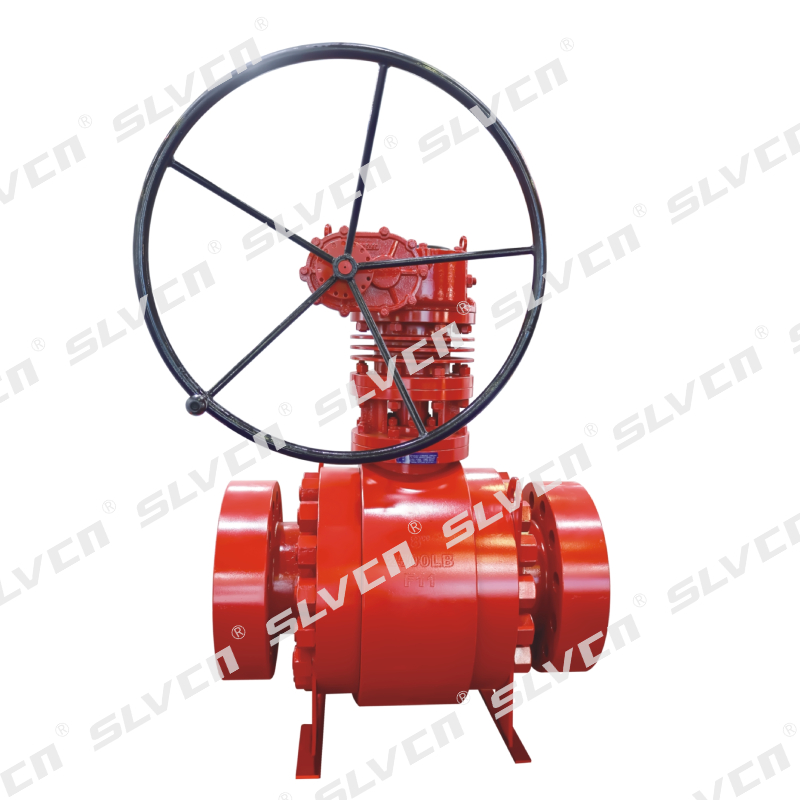
Our core product range covers forged trunnion-mounted and floating ball valves, top-entry and side-entry ball valves, fully welded ball valves, metal seated ball valves, cryogenic ball valves, high-pressure ball valves up to Class 2500 (PN420) and customized higher pressure ratings, as well as high-temperature service valves. Compared with conventional cast valves, SLVCN forged valves feature higher material density, superior mechanical strength, improved resistance to pressure fluctuations and thermal shock, and significantly longer service life under severe service conditions.
Designed for High Pressure, High Temperature, and Cryogenic Applications, SLVCN valves are widely used in long-distance oil & gas transmission pipelines, LNG storage and regasification terminals, offshore platforms and deepwater projects, power plants, refineries, compressor stations, and high-pressure chemical processing units. Whether handling flammable media, corrosive fluids, sour service media (H₂S), ultra-low temperatures, or extreme differential pressures, our valves ensure stable operation, bubble-tight shut-off, and maximum system safety in accordance with international sealing and performance standards.

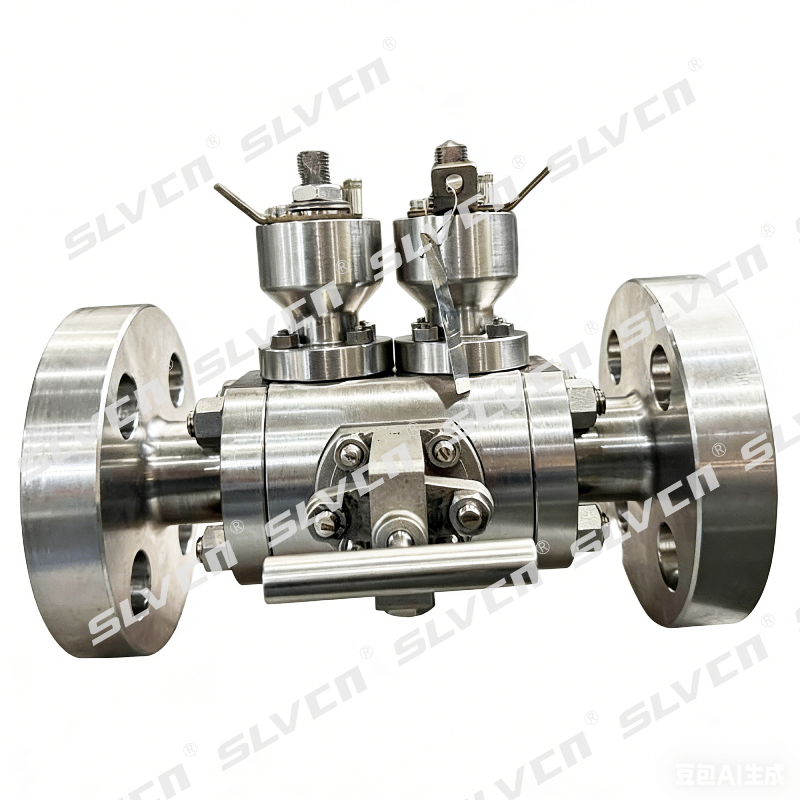
Historically, slurry pipeline systems utilized multiple separate valves in series to achieve double isolation and bleed. However, this setup requires significant space, increases the weight of the piping system, and introduces multiple potential leak paths at the flange connections. The modern trend in slurry infrastructure design is the integration of Double Block and Bleed (DBB) valves housed in a single, compact forged body.
A forged DBB valve features two independent isolation balls and a bleed valve integrated into the center cavity. This configuration offers several key advantages for slurry applications:
Safety and reliability are embedded in every design. Our forged ball valves are equipped with Double Block and Bleed (DBB) structures, anti-blowout stems, fire-safe designs in accordance with API 607 / API 6FA, anti-static devices, emergency sealing systems, and pressure-balanced seating structures suitable for high differential pressure operation. Valves can be designed with SPE or DPE seat configurations based on application requirements. For sour service environments, materials and sealing systems comply with NACE MR0175 / ISO 15156 requirements.
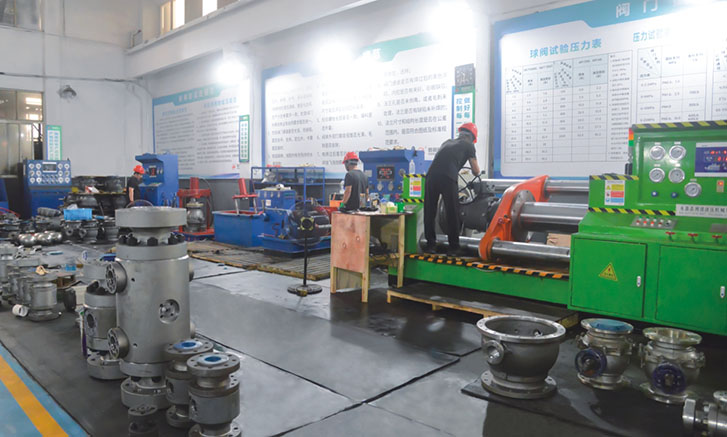
To ensure consistent quality, each valve undergoes a complete series of inspections and performance tests in accordance with API 6D, API 598, and ISO 5208, including shell test, seat leakage test (Rate A / zero visible leakage), fire-safe test, cryogenic test, operational torque test, dimensional inspection, and PMI material verification. SLVCN operates dedicated cryogenic testing facilities to validate valve performance at ultra-low temperatures down to −196°C.
SLVCN is certified to ISO 9001, CE, and API standards, and our products comply with API 6D, ASME B16.34, DIN, ANSI, and JIS specifications. We provide extensive customization capabilities covering sizes from 1/2” to 36”, full bore or reduced bore, special materials including A105, LF2, F11, F22, F51, Inconel, various soft and metal seat designs, and intelligent actuation with pneumatic, electric, and gear operators.
As industrial sites move toward smart operations, slurry pipeline valves are also undergoing a digital transformation. The integration of acoustic emission sensors, vibration monitors, and temperature transmitters directly onto the valve body allows operators to monitor seal wear in real-time. By analyzing changes in acoustic signals during valve cycling, predictive maintenance algorithms can determine the degradation level of the carbide coatings, predicting valve failure before it occurs.
Furthermore, the optimization of flow paths using Computational Fluid Dynamics (CFD) has allowed manufacturers like SLVCN to refine the internal geometry of the valve body. By eliminating sharp turns and dead zones where slurry velocity drops, we minimize localized turbulence and settling, extending the operational lifespan of the valve under the most abrasive conditions.
Today, SLVCN serves customers in more than 100 countries and regions, supplying valves to EPC contractors, engineering companies, and end users across Europe, the Middle East, Southeast Asia, and the Americas. Backed by strong engineering expertise, advanced manufacturing, and rigorous quality control, SLVCN is committed to delivering safe, durable, and truly engineered valve solutions for the world’s most demanding industrial projects.




 18061659285

