Leave Your Message
Engineered for extreme pressures, corrosive marine environments, and critical safety shutdowns.

Offshore oil and gas platforms—ranging from Floating Production Storage and Offloading (FPSO) units to fixed tension-leg platforms—operate in some of the most unforgiving environments on Earth. The processing of extracted hydrocarbons involves handling volatile fluids, high concentrations of hydrogen sulfide (H₂S), carbon dioxide (CO₂), and abrasive sand particles under extreme pressures and temperatures. In these critical environments, the actuated ball valve serves as the primary mechanism for flow isolation, emergency shutdown, and process control.
Modern offshore operations demand automation to minimize human intervention, optimize production rates, and guarantee safety. Manual valve operation is no longer sufficient or safe for high-pressure lines or rapid-response safety loops. Consequently, the commercial demand for heavy-duty pneumatic, hydraulic, and electric actuated ball valves has grown exponentially. These assemblies must not only withstand internal fluid dynamics but also combat external marine atmospheric corrosion, salt spray, and mechanical vibrations.
"Reliability on offshore platforms is not merely about system uptime; it is a fundamental safety mandate. A single valve failure can lead to catastrophic environmental damage, production downtime costing millions of dollars daily, and significant risk to human life."
To survive the harsh environments of offshore platforms, actuated ball valves must comply with rigorous international standards. These include:
Where and how actuated ball valves secure and control offshore oil & gas workflows.
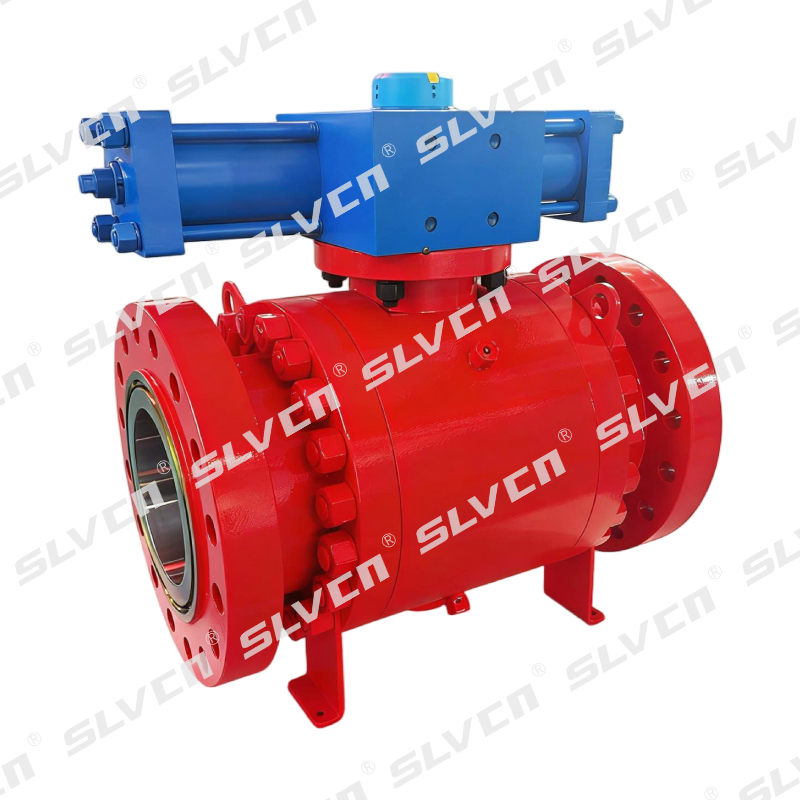
In safety-critical applications, actuated ball valves act as the final control element of the platform's Emergency Shutdown System. Positioned at the riser intake, process headers, and export lines, these valves must close within seconds of a signal detection. Due to the high torque required to break seat friction after long periods of inactivity, heavy-duty hydraulic or pneumatic scotch-yoke actuators are paired with forged trunnion-mounted ball valves.
SLVCN's Hydraulic Scotch Yoke Actuated Flanged Trunnion Ball Valves are custom-engineered for these high-torque fail-safe applications, ensuring absolute shut-off under maximum differential pressures.
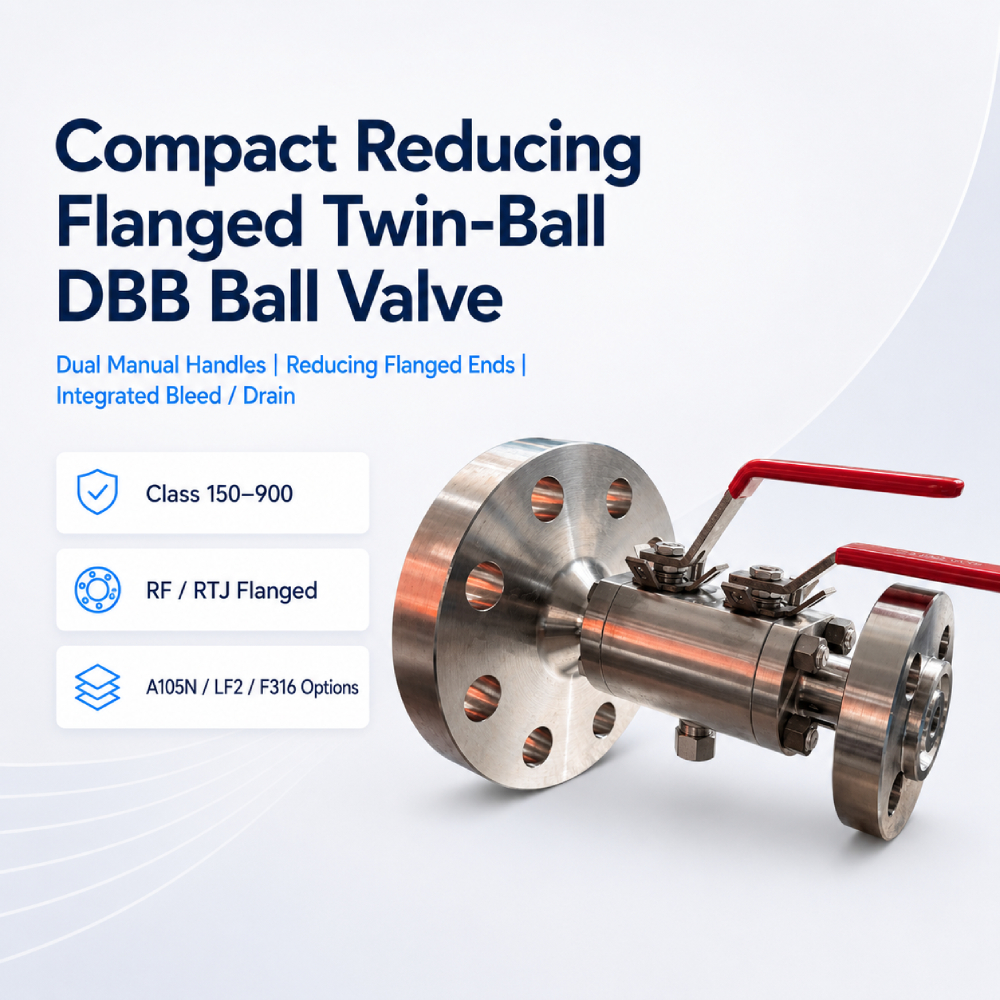
Deepwater wells push the limits of pressure and temperature. Topside manifolds and subsea templates require valves capable of handling up to Class 2500 (PN420) or higher. Traditional cast valves are highly susceptible to micro-porosity and structural fatigue under cyclic pressure. Forged steel bodies, such as those utilized in SLVCN's forged DBB trunnion-mounted ball valves, provide the necessary grain structure and mechanical strength to withstand these harsh conditions.
Floating Liquefied Natural Gas (FLNG) vessels store and process gas at cryogenic temperatures (-162°C / -260°F). Standard sealing materials become brittle and fail at these temperatures. Cryogenic actuated ball valves utilize extended stems to position the actuator packing away from the cold liquid, along with specialized lip seals and metal-to-metal seating.
Our Cryogenic Top Entry Floating Ball Valves with Extended Stem are specifically tailored for low-temperature solutions, ensuring bubble-tight sealing and smooth actuation in FLNG loading arms and regasification units.
Offshore crude often contains high levels of wet H₂S, causing Sulfide Stress Cracking (SSC) in standard carbon steels. Actuated ball valves deployed here must strictly comply with NACE MR0175/ISO 15156. This involves using forged body materials like ASTM A182 F51 (Duplex) or F53 (Super Duplex), alongside corrosion-resistant alloys (CRA) cladding on critical sealing areas to prevent premature failure.
With over 30 years of manufacturing experience, SLVCN is a professional designer and manufacturer of high-performance forged steel ball valves for critical industrial applications. We specialize in extreme working conditions including high pressure, high temperature, and cryogenic environments, providing safe and reliable flow control solutions for global industrial projects where operational reliability is non-negotiable.
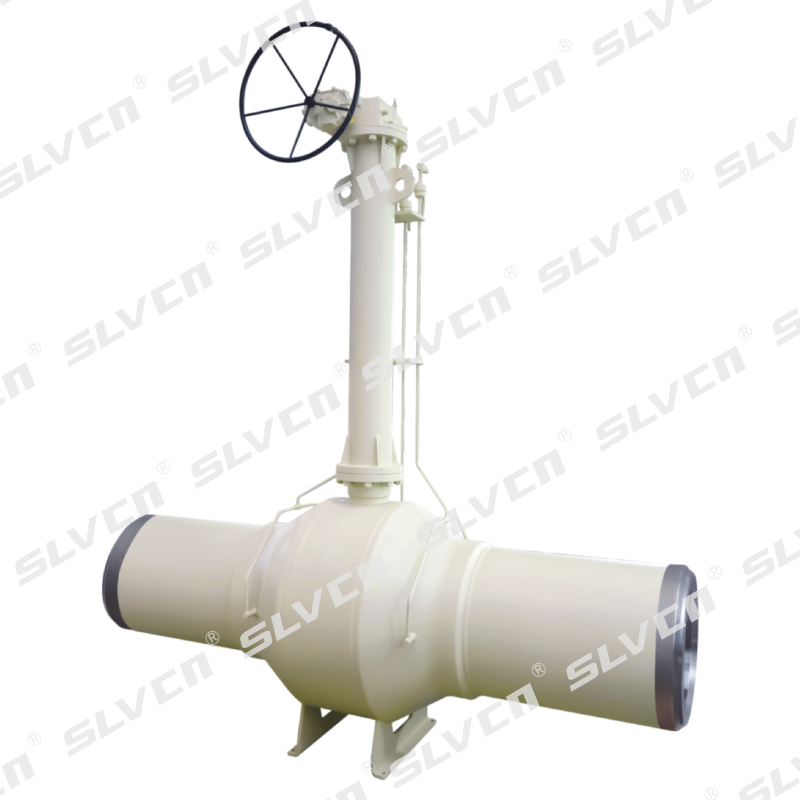
Our core product range covers forged trunnion-mounted and floating ball valves, top-entry and side-entry ball valves, fully welded ball valves, metal seated ball valves, cryogenic ball valves, high-pressure ball valves up to Class 2500 (PN420) and customized higher pressure ratings, as well as high-temperature service valves. Compared with conventional cast valves, SLVCN forged valves feature higher material density, superior mechanical strength, improved resistance to pressure fluctuations and thermal shock, and significantly longer service life under severe service conditions.
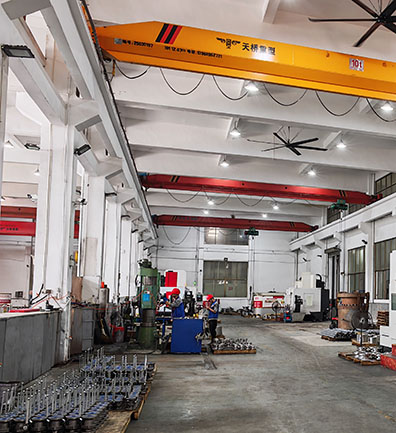

Years of dedicated manufacturing experience in extreme high-pressure flow control.

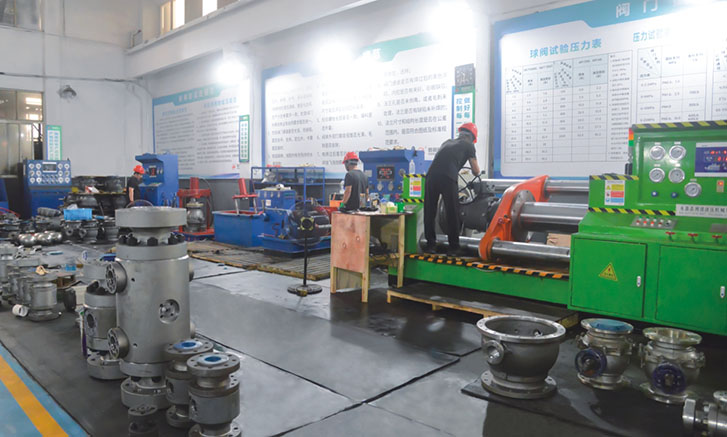
Designed for High Pressure, High Temperature, and Cryogenic Applications, SLVCN valves are widely used in long-distance oil & gas transmission pipelines, LNG storage and regasification terminals, offshore platforms and deepwater projects, power plants, refineries, compressor stations, and high-pressure chemical processing units. Whether handling flammable media, corrosive fluids, sour service media (H₂S), ultra-low temperatures, or extreme differential pressures, our valves ensure stable operation, bubble-tight shut-off, and maximum system safety in accordance with international sealing and performance standards.
Safety and reliability are embedded in every design. Our forged ball valves are equipped with Double Block and Bleed (DBB) structures, anti-blowout stems, fire-safe designs in accordance with API 607 / API 6FA, anti-static devices, emergency sealing systems, and pressure-balanced seating structures suitable for high differential pressure operation. Valves can be designed with SPE (Single Piston Effect) or DPE (Double Piston Effect) seat configurations based on application requirements. For sour service environments, materials and sealing systems comply with NACE MR0175 / ISO 15156 requirements.
Strict verification protocols ensuring zero defects for critical offshore deployments.
To ensure consistent quality, each valve undergoes a complete series of inspections and performance tests in accordance with API 6D, API 598, and ISO 5208, including shell test, seat leakage test (Rate A / zero visible leakage), fire-safe test, cryogenic test, operational torque test, dimensional inspection, and PMI material verification. SLVCN operates dedicated cryogenic testing facilities to validate valve performance at ultra-low temperatures down to -196°C.
SLVCN is certified to ISO 9001, CE, and API standards, and our products comply with API 6D, ASME B16.34, DIN, ANSI, and JIS specifications. We provide extensive customization capabilities covering sizes from 1/2” to 36”, full bore or reduced bore, special materials including A105, LF2, F11, F22, F51, Inconel, various soft and metal seat designs, and intelligent actuation with pneumatic, electric, and gear operators.
Today, SLVCN serves customers in more than 100 countries and regions, supplying valves to EPC contractors, engineering companies, and end users across Europe, the Middle East, Southeast Asia, and the Americas. Backed by strong engineering expertise, advanced manufacturing, and rigorous quality control, SLVCN is committed to delivering safe, durable, and truly engineered valve solutions for the world’s most demanding industrial projects.

Embracing digitalization, electrification, and intelligent diagnostic capabilities.
Traditionally, offshore platforms relied heavily on pneumatic and hydraulic systems. However, modern offshore projects are increasingly transitioning to all-electric actuation. Electric actuators eliminate the need for complex hydraulic power units (HPUs) and compressed air lines, which are prone to leaks and require heavy maintenance. Electric systems offer precise control, lower energy consumption, and seamless integration with platform control networks.
Integrating smart sensors into actuated ball valve assemblies allows for real-time monitoring of valve torque, stroke speed, and cycle counts. By utilizing this data, operators can build predictive maintenance models, forecasting seal wear or actuator degradation before an actual failure occurs. This minimizes unplanned shutdowns and optimizes offshore maintenance schedules, where dispatching technicians is logistically challenging and expensive.
Explore our comprehensive range of high-performance forged ball valves and double block & bleed solutions.


 18061659285